Riverton nears full secondary water metering as the state's 2030 usage-billing deadline approaches
Riverton has almost finished metering its secondary water system, and state law gives the city until Jan. 1, 2030 to finish and until July 1, 2030 to bill by usage instead of lot size.
Automated reporting, from the sources cited below. How this paper is made.
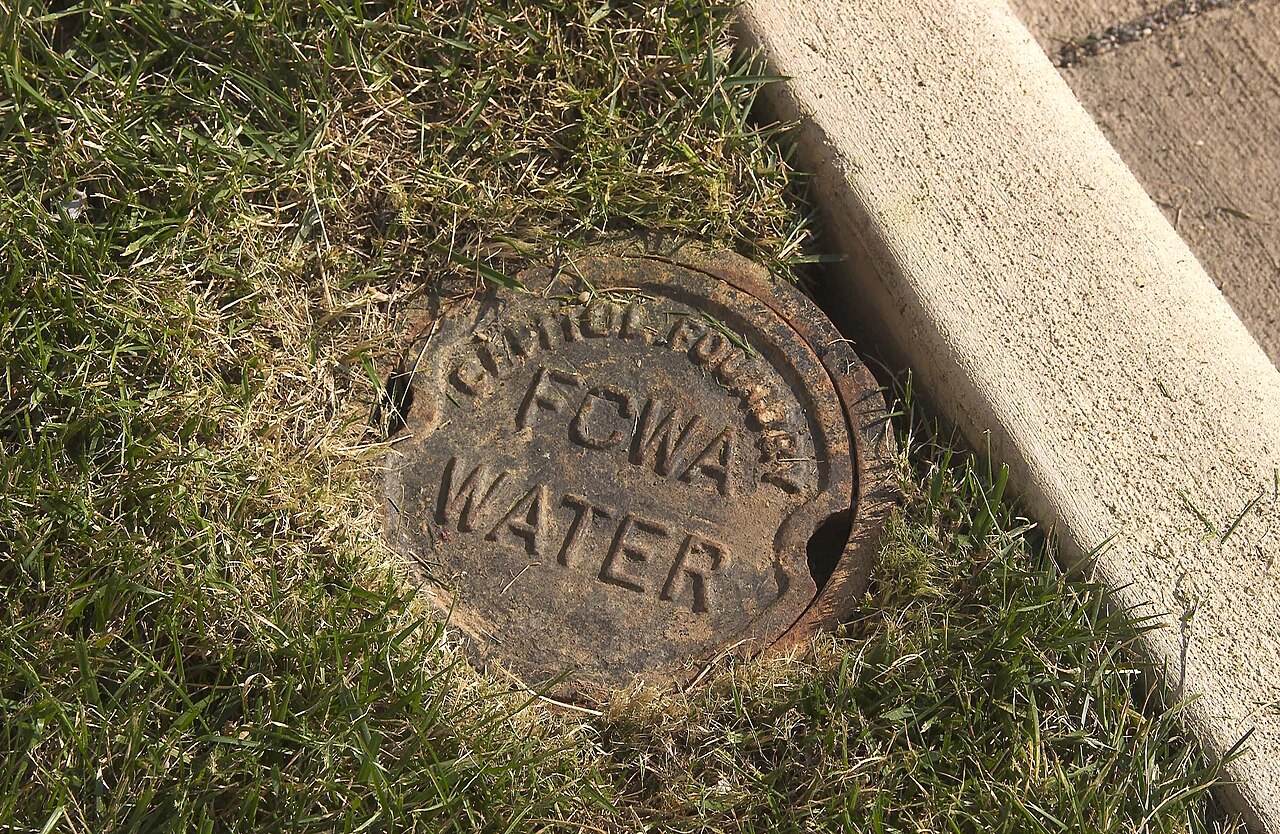
.jpg)
RIVERTON — Riverton's secondary water system runs through 182 miles of pressurized irrigation pipe with 2,581 valves and three reservoirs, and the city holds water shares in the Jordan River, Mayor Tish Buroker wrote in her April message to residents 1. The system went online to all residential users in 2001, according to the Water Conservation and Efficiency Element of the Riverton City General Plan 2.
The city's water rights and canal shares for the system total 19,958.81 acre-feet per year, the element states. The sources are shares in the Welby Canal, the South Jordan Canal, the Utah Salt Lake Canal and the Utah Lake Canal, plus Welby and Jordan River rights and the Collard Well 2. The element describes a system of seven pump stations and three storage reservoirs, and states that six of the seven pump stations have been upgraded with additional pumps, filters and valves 2.
Metering is the change underway. Riverton states that the plan to meter secondary connections was mandated by the Utah State Legislature in 2019 10. The water element states the city secured a loan from the State of Utah to install secondary meters on all of the city's connections and to complete a rate study that could change secondary water tier rates, and that installation of all residential secondary meters was expected to be complete by October 2025 2. The Utah Division of Water Resources states that HB 242 in 2022 and SB 251 in 2023 produced Utah Code 73-10-34, which requires all secondary pressurized connections to be metered by Jan. 1, 2030, and that Utah Code 73-10-34.5 appropriated $250 million in ARPA grants for the purchase and installation of secondary water meters, distributed by the Board of Water Resources 5. The mayor wrote in April that the four-year project was basically complete except in some smaller residential areas and HUDs 1. The city's water rates page states Riverton "is currently in the final stages of installing meters on all secondary water connections" 4.
The billing change follows the meters. The division's summary of 2025 water legislation states that under HB 274, by July 1, 2030, a secondary water supplier shall begin billing an end user using a tiered conservation rate, that a supplier must charge an end user at the lowest tiered rate if the end user is using a portion of the water to grow food, and that violators are subject to enforcement action by the State Engineer 6. The same summary records that by July 1, 2027 a culinary water rate structure must include one or more conservation efforts in the rate charged for at least the highest usage block of residential customers 6.
Riverton bills secondary water by lot size, not by measured use. Its water rates page lists a base rate of $3.05 for each single-family or duplex meter and lot-size rates of $23.62 a month for a lot up to a quarter acre, $27.97 for .26 to .33 acres, $34.99 for .34 to .50 acres, $42.83 for .51 to .74 acres and $49.86 for lots of .75 acre and larger, plus an irrigable acreage rate of $134.55 for multi-family residential properties of three units or more and for non-residential property 4. Culinary consumption on the same page is billed by tier, from $3.85 per 1,000 gallons in Tier 1 to $8.95 in Tier 4 4. The water element's Table 10 listed the secondary structure in effect when the plan was adopted — a base rate of $2.50 and residential lot-size rates from $19.36 at the smallest tier to $40.87 at the largest, with no irrigable-acreage category — and states the city would be looking at completing a rate study on both the culinary and secondary systems 2.
The city says the rate structure will be revisited after the meters produce data. On its water rates page, Riverton states that once reliable and representative usage data has been collected from all metered connections, "the city plans to evaluate and potentially adjust secondary water rates in the next few years," and that it needs more than a few months of data to capture seasonal variation 4. In her September message, the mayor wrote that once there are meters on all homes in the city, Riverton may begin charging by usage, and that "this is something the state will require come 2030" 7.
Riverton does not control when the water arrives. Four canals feed the system, and the canal companies decide when to begin filling them, based on water availability for the whole growing season, the mayor wrote 17. In April she wrote that the canal companies were expected to start releasing water around April 15, that about two weeks would be needed to fill ponds and pipes and that water would be available to residents around May 5, and that residents on the west side of the city might have water sooner through the city's well 1.
The city's secondary water page states service is typically available from about May 1 through Oct. 15, requires residents to shut off their own secondary valves no later than March 15, and makes unlawful use of secondary water a class B misdemeanor with possible fines up to $1,850 per day of violation and up to 180 days in jail per day of violation 3.
Supply was already short when the season opened. The mayor wrote in April that Deer Creek was 80 percent full and Jordanelle 60 percent full, with very little additional filling expected because of a lack of mountain snowpack 1. The Deer Creek pool elevation at the dam was 5,378.04 feet on Sept. 27, 39 feet below full pool and down 3.5 feet over 30 days, according to the Deer Creek Data Watch dashboard, which lists the U.S. Bureau of Reclamation's Upper Colorado hydrodata as its source 8.
Riverton does not pay a monthly bill for secondary water; it owns shares that determine how much water the city can take from the canals, while its culinary supply from the Jordan Valley Water Conservancy costs the city an average of about $278,000 a month, according to the mayor's September message. Secondary water fees pay for maintenance of pipes and pumps, filter screens and manpower 7.
The City Council adopted Ordinance 26-08 on May 5, 2026, adopting the Water Conservation and Efficiency Element as an element of the general plan and correcting the previously adopted water conservation and efficiency standard 2. The agenda for that meeting listed the ordinance under public hearings and action items and also listed Resolution 26-15, approving the Riverton City Water Shortage Management Plan 9.
The system produced one public health incident this year. Riverton issued a boil water order on May 19, 2026 after an illegal cross-connection between a property owner's culinary water system and secondary irrigation water allowed irrigation water to reach the drinking supply; the city lifted the order after tests found no bacteria, as the Ledger reported 11.
What happens next is largely calendar-driven. Service is scheduled to end around Oct. 15, valves must be shut by March 15, and the canal companies decide in the spring when the next season starts 13. The city says a rate evaluation follows once all connections are metered and enough usage data exists, and state law requires tiered conservation billing by July 1, 2030 46.
- https://deercreek.hydromap.com
- https://law.justia.com/codes/utah/title-73/chapter-10/section-34/
- https://le.utah.gov/xcode/Title73/Chapter10/73-10-S34.html
- https://rivertonutah.gov/blog_detail_T55_R590.php
- https://rivertonutah.gov/utilities/water-rates.php
- https://southvalleyledger.com/articles/riverton-lifts-boil-order-after-irrigation-water-reached-drinking-supp-e89449/
- https://water.utah.gov/secondary-metering/
- https://water.utah.gov/wp-content/uploads/2025/07/2025-Water-Legislation.pdf
- https://water.utah.gov/wp-content/uploads/2026/07/Riverton-Water-Element.pdf
- https://www.rivertonutah.gov/blog_detail_T55_R564.php
- https://www.rivertonutah.gov/blog_detail_T55_R564.php?page=/newsroom.php§ion=Newsroom
- https://www.rivertonutah.gov/meters
- https://www.rivertonutah.gov/water/secondary.php
- https://www.utah.gov/pmn/files/1425243.pdf
More from this paper
- Data centers next door: what the record shows about the ones already in Bluffdale and South Jordan
- Jordan school board revises vacation policy; Herriman mayor announces city reading campaign
- Justice Sotomayor's Jordan School District visit followed a student video invitation
- Jordan District says a junior is training with the U.S. Women's National Team in volleyball